Why Birthdays Can Be Hard After Divorce

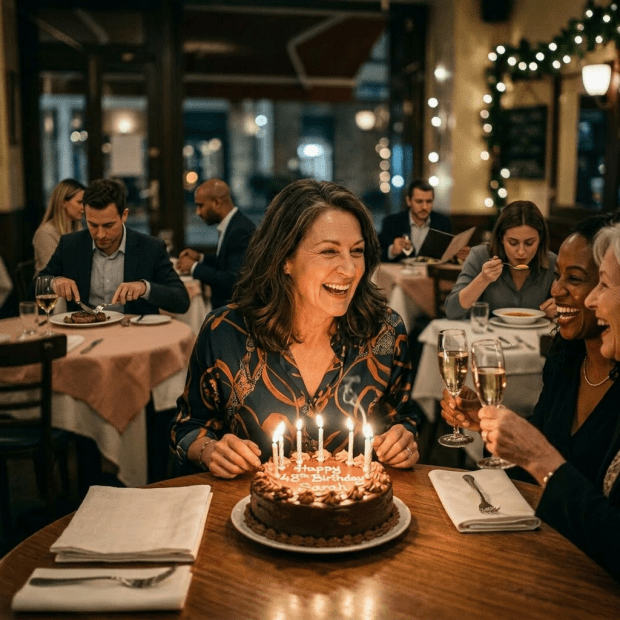
Woman blowing out candles on birthday cake at dinner party
Plan ahead so you are not alone and have fun on your special day.

I have had clients tell me that birthdays after divorce, especially the first one, can be difficult..and I agree this is true, especially for those who were married for some time.

It’s common knowledge that celebrating holidays after any break up is hard, and there are many rom-coms about this. Even when you have done the healing work and feel grateful for the new life you have created, there is something about waking up on a birthday morning as an unmarried person that feels melancholy.

First off, this is completely normal. Your brain recalls what usually happened on birthdays – the celebration with the former spouse (whether you went out, had a party, or simply shared a quiet dinner and movie at home). There was always someone there with you, and when there is not it can alert your nervous system and create feelings of despair.

The great news is this is why we do the work! We learn to love ourselves and be grateful for all we have, all we have built, and all that is to come. Of course, that never means we cannot have a good cry or what feels like a little setback – don’t ignore those feelings.

But then, after you’ve come back down to baseline, to the knowing that you are ok, that you love yourself and that love is always enough (one of the key discoveries of healing), you can make a plan to celebrate the day in a way that feels good. In fact, I always suggest making a plan for a fun birthday in advance, so you don’t get stuck in negative feelings when the day comes and you don’t have plans – even if you don’t feel like celebrating.

It’s worse to sit around and do nothing on a day you used to share with a partner, then to get out with a friend(s) and have some fun, or to take a little trip or staycation. Remember that you deserve to be happy, and sometimes we need to work harder to make that a reality.

Happy birthday, whenever it may be! 🦋

Words Matter: Supporting Divorcees with the Right Phrases

There is something I’d wager most people say to newly divorced people, or those getting divorced, that usually will not help the person going through the trauma, even if they don’t know it.

Saying these words when someone tells you they are divorced or getting divorced can actually send the wrong message, AND can make that person feel worse, even if they don’t realize it…this is the case even if you meant it sincerely and it comes from a place of love. 

Society, culture and religion have classified divorce as taboo and stigmatized it for a long time, and those stigmas often play into emotions as one goes through divorce, so words are important.

Divorce is not easy, even when both parties amicably decide to split. If children are involved it can be even more difficult. Ranked as one of the most severe emotional stressors a person can experience, divorce is comparable to losing a spouse, PLUS more. Not only does one lose the actual person, but they are still alive, and there are no “rules” as to how to handle this. 

The relationship also dies, and with that the shared future dreams, goals and identity (the “we”). Rejection, betrayal and the foray into the legal process, which can become highly conflicted, is enough to push anyone over the emotional edge.

With all that in mind, when you meet someone who tells you they are getting/got divorced, and say the words “I’m sorry!” it can perpetuate the stigma, have a profound effect on their emotional state, and can reinstate feelings like self-doubt, guilt or grief, to name a few. Most people need to take time after divorce to heal, accept the changes in life, and begin to rebuild, and sentiments can energize or debilitate.

Of course many people do not realize this, especially if they have not been divorced, and they say “I’m sorry” to mean they are sorry for what the person has to go through — and this is perfectly normal and happens all the time, so don’t feel badly about it. But moving forward, a more supportive response might be to ask how they are doing or if they need anything. You might say something like “that must be challenging — I hope you find your peace.” This response recognizes that the person may be going through a lot, but that there can be a light at the end of the tunnel and you support them. Of course if you are close to them you can offer to be there in other ways.

There is also a great way for the person receiving the “I’m sorry” words to respond. By saying “there’s no reason to be sorry” you assert your self-confidence and self-assurance that you will be alright, and that you will not only survive it, but thrive. When people told me they were sorry I divorced, I used to respond “don’t be — I’m not!” Although it was the toughest decision I ever made, I knew it was necessary for me to be truly happy, so although I knew that I had a long healing road, I let people know that I was not going to wilt on the vine of life. I welcomed the support but didn’t want anyone to feel sorry for me.

Words can make a big difference, but many of us don’t think about them before we utter them. In this case you can truly show support by what you say when someone says they’re getting divorced, and this can make a difference in someone’s emotional state and their overall healing journey. 🦋

(This blog appears as an article in an extended version on Medium)

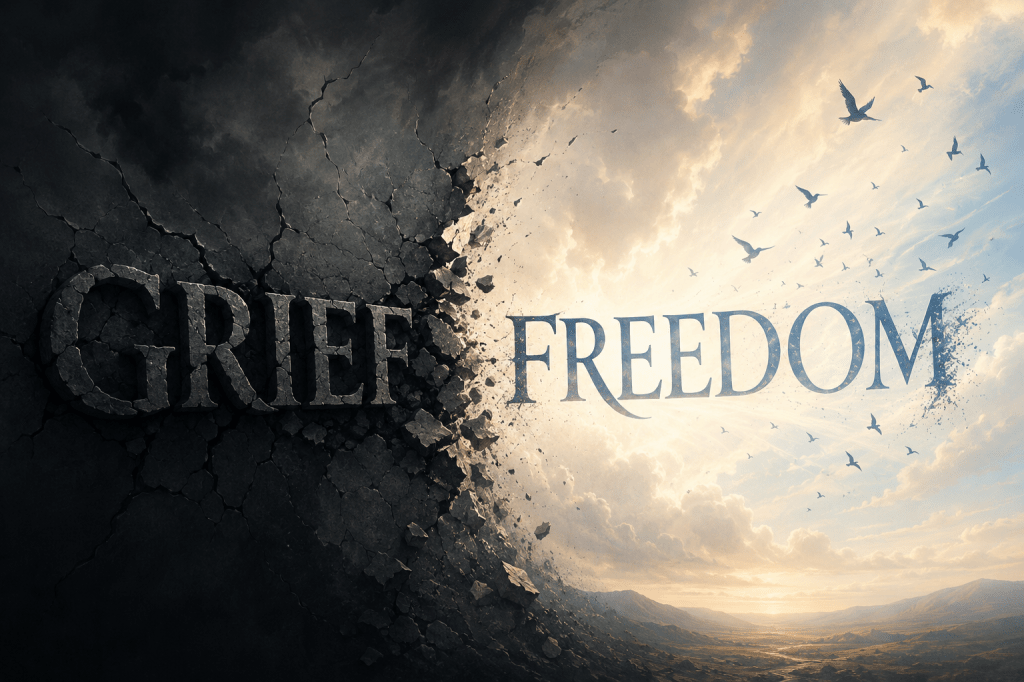
The Grief-Freedom Conflict: Finding Peace with Divorce

We all want to find peace after divorce – sometimes the urge feels so strong that there is almost a sense of desperation, and the journey itself can be emotionally conflicting. Moving on from a marriage involves many layers, so it is important to be aware of them in order to heal.

I knew intuitively that the loss of a partner would not be easy, even though it needed to happen for me, but I didn’t understand the depth of that realization in some ways. After my former spouse moved out and our divorce was pending, the physical absence of him filled me with both grief and freedom, and this can be a confusing set of opposing emotions for many women to get through.

On the one hand, there is a so much grief at the end of a marriage, despite other feelings, and even if the divorce was mutually agreed upon. It is easy to understand that the end of a marriage can feel like a death – we lose so much, not just our partner, but our identity as a married person, our role as a couple, future dreams, plans and goals we created together, and the connection as a family unit.

Most of us also tend to feel like we no longer have an identity when we realize that we don’t really know who we are any longer without the titles that come with marriage/partnership. We have to dive deep to figure this out so we can move forward.

The loss of the old, familiar version of you (as a married woman) can be traumatic, and even something you may not have considered prior to divorcing. But she cannot continue to be the same person any longer without the existence of the defined roles she played in that relationship. So there is grief for who you were at that time in your life. This is normal and will haunt you less as you do the work, until it no longer feels scary.

The wonderful part as you face the future is to focus on the exciting time you have to rediscover yourself, find things you love to do and people you enjoy doing them with, and to always keep your heart open to possibilities. The improved version of you will be well worth the journey.

Grief for the past and for what has ended can also be challenging because it puts us out of our comfort zones. We tend to become so comfortable within a marriage or partnership, and even more so as the years add up, that when it ends we can feel as if we are in a twilight zone episode.

Humans by nature are comfortable with routines because they make us feel safe, and – newsflash: this is why SO MANY people stay married when they are unhappy.

When I divorced I was not overly lost about who I was as an individual, as I had already started working on myself a few years prior to the split, so I think for me it was not such a huge shock when it came to reinventing myself. By the time we actually parted physically I knew a bit about what I wanted in my solo life, at least for starters.

I still had to do some “big girl” things like buy my own house, for example. While these things felt a bit strange they also felt to me like a relief, a feeling of freedom, because I knew I was on my way to finding joy. Making those decisions on one’s own can feel scary, but also freeing because they are steps toward a new life.

Thus we get to the conundrum between feeling grief and feeling free. When we start pulling apart all the emotions and begin to make solo future plans, eventually we experience a feeling of freedom – or we may experience it right away, as I did, in conjunction with episodes of grief. This emotional ambivalence can pull at your heart, and is enough to make one feel guilty and sometimes even a tad crazy…BUT it is normal, so do not be alarmed.

Know that you have the right to feel good about the freedom feelings – I certainly did. It was the catalyst that pushed me toward consuming the healing work; it was a glimpse of what my life would be like once I healed, and for that I was and I am grateful.

If you are experiencing any of these feelings after divorce, you are surely not alone. Sink into yourself, into the healing process, into self-care and self-love. When you have a moment of wonder, a glimmer of hope, love or joy – grab it and pause: close your eyes, breathe, and sit with that feeling for a while – even just a few moments – and recognize it for what it is worth: validation that you are doing the right things to heal and be free.

The main goal in healing is to love yourself, because love allows us to open and soften, become our best version, guides us to the paths that will nourish our lives, fills us with joy, and brings peace. 🦋

When Divorce Healing Includes Awkward Paperwork

Why is Your Divorce Your Doctor’s Business?

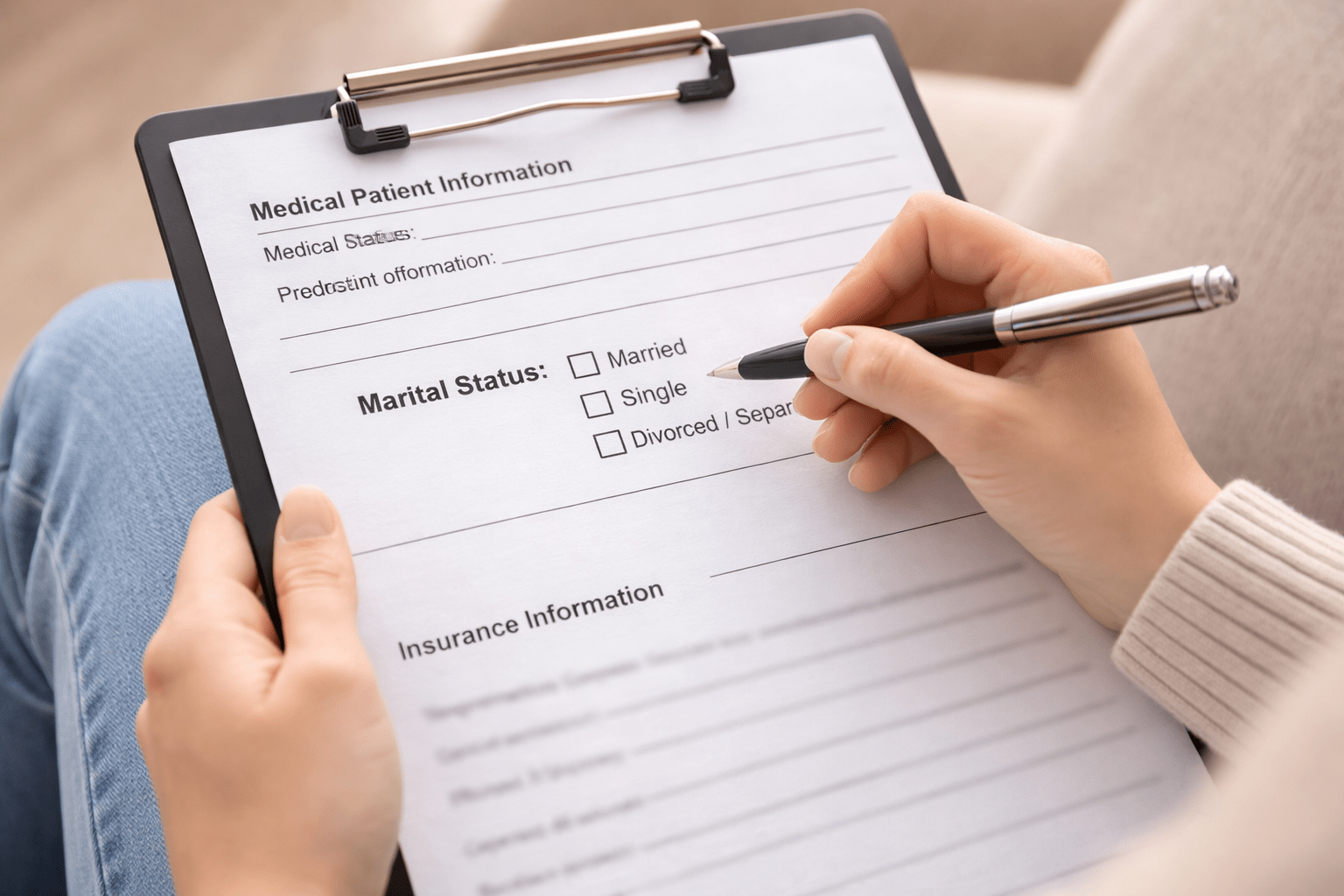
So there I sat yesterday, in a doctor’s office filling out an intake form. As I have done before in other doctors’ offices, I once again snickered when I came to the “marital status” field. I could check the “single” choice, or I could check “divorced/separated.” I hesitated for a moment and contemplated…not only which one to choose (or whether to leave all boxes unchecked), but also because this question always stumps me. Is the doctor going to diagnose me with chronic divorce? Will there be a prescription for that?

So there I sat yesterday, in a doctor’s office filling out an intake form. As I have done before in other doctors’ offices, I once again snickered when I came to the “marital status” field. I could check the “single” choice, or I could check “divorced/separated.” I hesitated for a moment and contemplated…not only which one to choose (or whether to leave all boxes unchecked), but also because this question always stumps me. Is the doctor going to diagnose me with chronic divorce? Will there be a prescription for that?

One reason this question exists on intake forms is because the doctors want to determine your stress level? Granted, stress level can affect all kinds of things — emotionally and physically — so this may seem a valid question to some.

The question can also come from a public health standpoint — to gather data on marital status and things like longevity or heart disease risk (there are studies on these).

Another reason I surmise this question exists is for administrative purposes — such as who is the main insured or who makes health decisions if you cannot. But really, this can be a direct question and often IS, in the part where it asks for the name of the insured under your policy.

What about a OB/GYN intake form — should that be different? One can argue that it is important for these doctors to understand whether there is a partner involved in making decisions, such as with pregnancy-related discussions. But isn’t this an outdated viewpoint? (I think so — again, anyone can be your “partner” in your pregnancy journey).

This information becomes part of your medical profile, which stays with you until perhaps it is altered. So maybe healthcare systems use it for data collection and research. Again, this is a bit creepy in my opinion, but for those who are younger and did not grow up in a world where we actually had privacy (or at least much more than we do now), it may be hard to contemplate.

The bottom line is that many of these forms are outdated and built on old-school assumptions, which can make one feel almost violated, especially women.

Back to the doctor’s office…sitting there looking at the form I laughed aloud, as there was not a box to check that said, “previously divorced but in a mature, healthy relationship with a partner who respects me and makes me happy, and who knows whether we will one day marry, as we personally feel it is not necessary, but I am a strong, independent woman and make my own choices.” 

How can “divorced/separated” or “single” truly tell anyone about your emotional state, your happiness quotient or your outlook on a number of health metrics, let alone your mood/outlook/perceptions and realities…knowing that these can change daily/weekly/momentarily, based on many factors and events. To me it seems like this leads to very personal, private information (again, unless the doctor is perhaps a psychiatrist or psychologist) and you are engaging their services for emotional help.

Somewhere between my blood pressure and my injury evaluation, my divorce became a data point. 🦋

A slightly different version of this article appears on Medium. Please follow me there for more articles that do not appear on this blog. You can follow me by clicking here.

Why Some Encounters Can Feel so Big During Divorce Recovery

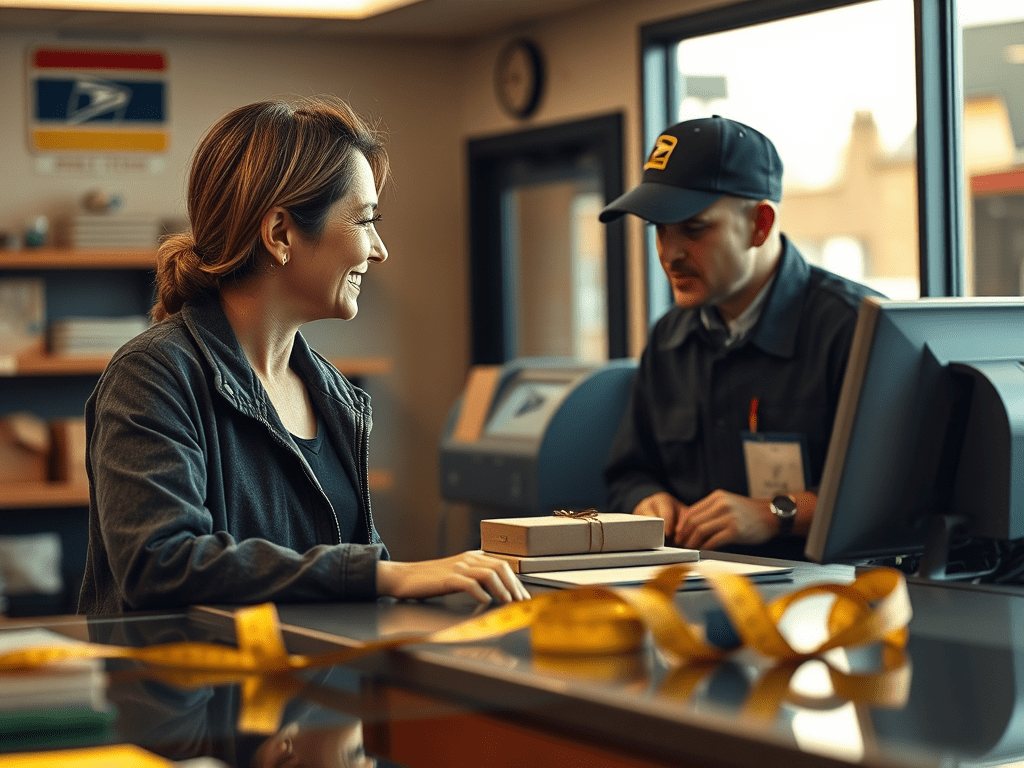
The other day I went to the post office to send some packages. I walked in with a smile and waited while the employee was finishing up with another customer. When she left I stepped up and said hello, smiled and made eye contact. I was calm and not in a rush, and I asked about 2 different options for shipping my packages.

Immediately I felt the man behind the counter judged me for some reason – he was not kind like he was with the other customers, chatting them up. I sensed a deep sadness within him for whatever reason (maybe I reminded him of someone?), so I was extra nice. He asked if I wanted to send the packages ground or priority mail, and I asked the cost difference between them so I could decide. He clearly became annoyed as he got out a measuring tape to measure the packages, yet how was I to make an informed decision when I had no idea of cost?!

I had to step aside to address the packages and he helped 3 other people during that time, chatting away with them. When I stepped back up he immediately became distant again and asked me if he could help the woman behind me first (she had 1 package and I had 2, but that was simply rude) – but I declined and said my packages were ready to go.

This experience was a lesson, albeit strange. When we are going through something challenging it is so hard sometimes to encounter situations like this, especially when we have done nothing to offend or disrespect the person who is giving off negative energy towards us. I thought that had this happened when I was healing from my divorce (or having a difficult day in any respect), it may have been received in a different manner. Every one of us has challenging days sometimes but you never know what the other person is dealing with, and he had no reason to treat me that way when he was kind to all the other customers.

What I learned from this was that no matter what, it is a remarkable reflection of your character to stay cordial and calm. Whatever the other person is dealing with that prevents them from doing the same – that’s THEIR problem, not yours. This is especially true when you yourself are dealing with difficult things, as it makes it even harder not to react nor take it personally.

I hope my experience may put things into perspective should you ever find yourself in a situation like this. Keep calm, smile, thank the person for their help, and wish them a good day. Maybe they will contemplate that at some point and treat the next person better. 🦋

Taking Steps Backward in Healing from Divorce

I want to share with you a recent personal story of having to go back to re-healing a painful part of myself. I have spoken many times here on this blog and in my podcast about the nature of the healing journey, and how we always need to be mindful of our need to work on parts of us that we may have thought we already healed.

Self work is an ongoing part of our journey as humans, and divorce is no exception. The first thing to understand is that it’s not only normal, but inevitable you’ll need to work on yourself repeatedly. If you notice you are feeling like you’re in a funk you must explore it; it could be something new, or something from your healing journey coming back to be re-evaluated.

Recently my former spouse sent me a text. I believe it was meant to show co-ownership for the demise of the marriage (instead of pinning it exclusively on me), but the statements were strange and incorrect.

The text triggered an old wound that I spent a long time healing, one in which unkind words were used to make me feel small. Luckily I caught this quickly – many people don’t. I spoke with someone who helped fix the physical ramifications of these backward steps, which had settled in my right hip (the masculine side, where I had horrible pain for the years leading up to my divorce). We cleared it out and now I continue to work deeper on myself to promote further healing.

I bring this to your attention because this happens all the time to many people who have been through divorce. It is so easy to let the fear creep back in, to remember the familiarity of the old wounds and to allow them to reopen. The longer we wait to work on these wounds, the more difficult it can become.

The nature of your situation may be completely different from mine, and may not directly involve a former spouse. It could instead come up through words spoken by another, or just plain old fear taking over (many scenarios can provoke this). If you have an experience that stirs up old wounds, notice it. Think about it. Write about it. Start taking it apart, and if you can’t do that on your own, get help.

It’s ok to take steps backward. It’s ok to feel triggered by the past. BUT, it’s not ok to ignore the feelings that come up from something or someone else’s actions toward you, because the only one who will be hurt is YOU. Similarly, the only one who can “fix” you is YOU.

Love yourself – not only because you need to, but because you deserve it. 🦋

The Power of Taking Breaks in Healing and Life

I have talked before about taking a break in the healing process when necessary, and lately I have used this powerful tool in my every day life to reset, think and prepare in various aspects of my life…and it has been amazing. It has allowed me to focus on things I want to bring into my life and change those that are not working or may need tweaking. Focusing my energies elsewhere was just the break I needed to jump back into helping people heal!

For those of you who follow my podcast you know that I put a lot of effort into it by finding the right guests and topics, and then spending the time planning on how best to present the information that will help my viewers and listeners. It is a labor of love.

A few months ago I decided to take a hiatus to gather ideas and thoughts for the next batch of podcasts, consider topics and who I wanted to have as guests, and just as importantly – give myself some space from the time spent on all this. I focused on other endeavors and also on myself. It felt great to distance myself from the process and hard work that goes into the podcast.

I have recently started shooting new episodes and I am not only full of energy for it, but also super excited. After The Divorce to Bliss Podcast was named one of the top 100 divorce podcasts I started getting calls and emails from publicists, and I have been blessed to have some high ranking guests in the coming season. I have reached out to others as well and hope that some of them will accept my invitation to join me in informative healing discussions.

If you are not a viewer or listener of the podcast, I humbly invite you to check it out. Please subscribe, like, comment and share posts that you think might benefit others going through divorce, because if I can help them in the slightest way to ease their burdens, then I have succeeded in my mission.

Thank you for all your support, as it truly means the world to me. Please reach out to me if there is a topic you’d like me to delve into on the podcast – I love feedback from my viewers/listeners. The podcast can be found on YouTube and on various podcast audio channels (like Apple Podcasts, Spotify and Amazon Music).

Thank you! 🦋🙏🏻

Avoiding Comparison in Your Healing Journey

The idea of comparing ourselves to others has popped up a few times in the last week, so I thought I would write about it because it is important to not fall into this trap when healing.

It is easy to look at others and the particular ways in which they do things, to see if they are successful or not. When we are going through a similar situation this can become rather obsessive, as we compare our own journey to theirs and think we may see where we may be improving or lacking. BUT there is always a big risk in using comparisons.

Each one of us is different, in many ways, especially when it comes to healing. No two people heal identically, and this is beautiful because in healing one tunes into the self and learns what is needed and desired, what has been lacking and what will allow the heart to open wider.

When we compare our healing journey to that of another (or multiple people), we tell our brain that the way we are doing things or the number of things we need to do to heal is too much or too hard. In such situations we often start to blame ourselves for not being able to heal like the next door neighbor did after her divorce – for example, we may think “look at her now, all beautiful and skinny and dating several men, while I sit home eating ice cream and feeling terrible.”

This way of thinking will lower energy levels, quash the desire to keep working on the self, and attract more of the same thoughts and feelings, leaving us circling the drain instead of making progress.

Keep in mind also that often what you see is not real. For example, you’ve likely seen social media influencers who make their lives look like fairy tales. Sure, maybe a few of them live off a trust fund and have no spending limits to travel the world and buy the best “stuff,” but the reality is that every single person has problems, issues, demons, past regrets, or a combination of any or all of these. What you are seeing is a moment in time, and not the inside of the heart of people who look like their lives are “perfect.”

I will share something with you. When I wrote my book I refused to look at any other books on divorce healing or divorce journeys. I wanted to tell MY story, without influence from anyone else’s journey or thoughts. I NEVER even researched whether there were other books like mine (although I figured there were). I did the exact same thing when I started my podcast – I didn’t watch or listen to any other divorce podcasts, because I truly wanted to share what I learned and new ideas as well, with the best guests to help me.

I believe that going through difficult experiences is the way for each of us to learn and be better versions of ourselves, and if we treat healing this way – instead of something we “have to” do, we find gratitude in the process and have an experience that will create a new beginning in our lives. 🦋

Transform Fear into Growth: Steps to Live Your Best Life

Do you ever notice that most people do not truly embrace life until they are confronted with the ultimate scare: death? This can also occur when facing other major hardships or losses, like divorce. I have noticed as I grow older and people I have known or went to school with started passing away or becoming ill. It really is a sucker-punch for so many people when they start to experience this.

When we are young most of us feel invincible – we do not think about our own lives ending; this is normal and justifiably so because when we are in our prime most of us feel strong and healthy. As we age in healthy bodies we tend to still feel a bit of that invincibility, but at some point that changes.

Starting in my late 40s a childhood friend passed away from an overdose. It was unclear whether this was an accident or on purpose, but she had been suffering for a long time from emotional challenges. Ironically enough, we had re-connected shortly before her death and had planned to get together for lunch, and I was looking forward to it. Sadly, we never got to have that time together.

Two others with whom I went to high school passed away. One had been a college roommate my first year at university, and both she and the man who passed were big personalities in high school. Both had heart attacks. Then another man with whom I had gone to college suddenly passed.

Also during this time several friends and family members have been diagnosed with cancers, auto-immune disorders and other diseases, which they are all fighting and/or living with to this day.

Aging is a beautiful process, as I have learned to accept with hesitation at first, but then ultimate gratitude. Yes, it is sometimes hard to see the body change and respond differently in some ways from how it used to, but I am accepting it with grace. I embrace the wisdom life and this body have provided me, and I have to remind myself of this sometimes – but that is ok, I am an imperfect human being (like all of us).

When we are confronted with the death and illnesses of others our own age or even older loved ones, many people choose to dwell on these as negative experiences, which can cause a lot of fear. But if we sit quietly with this for a bit (sometimes it takes a while) we will see that the only way to not be afraid of death is to actually LIVE.

Some ways to start living are to get out of your house, be in nature, do things that sound interesting or fun that you’ve never tried, breathe deeply, learn to meditate, travel, laugh, eat healthy foods, exercise, dance, and write down your feelings and experiences in a journal. Until we start truly living and experiencing life we are not living.

We are not here to sit around and live in fear, or stay in a house most of the time. We are here to be our highest versions so we can spread our wisdom, joy and love. Just think if we all vibrated on this level what the world would look like! It sounds impossible but it’s not – every change starts with baby steps.

So even if you don’t know how you want to evolve into your highest self, start making little changes in your daily schedule that will benefit you – body, mind and spirit – and notice how you feel. Simply just observe how your body feels, how your mind feels (check your emotional state), and your spirit (connection with a higher source tends to increase energy levels). Write it down and share it with someone who loves you. Hold yourself accountable to make these small changes and put them in your schedule daily.

We never know when our time will be up, or when we may have to pivot immensely from the unexpected. BUT there is always a choice in each moment. We can either choose to (1) be scared of the things we cannot control, and let that hold us back, or (2) empower ourselves with the knowledge that we can live our best lives by allowing ourselves to patiently make changes toward that goal. If you chose the latter get ready to see and feel amazing results.

If you are here now you have time to be a better you. 🦋

Stay Classy While Healing

Being classy has always been important to me, but who would have thought it can actually help with healing?

By being classy I mean upholding high standards in relationships, conduct, and integration with others within your work environment and personal life. It encompasses a genuine belief in integrity and being the best version of yourself. You can’t fake it, although people continuously try, and you can change your level of class if you really want to make a difference in your life.

To start the journey toward a classier life it is important to adopt an attitude of gratitude. When you are alone you can express your feelings – scream into the pillow, punch a punching bag or cry. But when you go out, be grateful, show your good manners. We do this because the version of ourselves we put out there will attract different things and people into our lives. If you can learn to do it when you are at your worst, then you can master staying classy and make it a part of your life.

Always be aware of how you present yourself to the outside world. You may be a mess inside, but going out – whether it be to the grocery store, a friend’s house or a party – is a way to show the world that you respect yourself. People will be attracted to the higher version of you who cares about herself enough to show up, look good and be present.

People notice a classy person and the ways he or she responds to situations. The recognition creates an ability for the observer to look inward and realize how nice it is to be able to be respectful and hold oneself together, even in a storm. It sets strong examples of courage, self-worth and respect. It creates “I want to be like that!” moments and gives great teaching examples, especially for children as they emulate what they see and feel.

Here’s a personal example: when I was in the middle of my healing journey and feeling vulnerable, I went into a store. The sales clerk was pretty rude and didn’t look me in the eyes. Part of me thought, “she is representing the store she works for and if I were her boss I would be unhappy.” But despite my own challenges and the difficulties I was going through – and I was in no need of a confrontation – I put on a smile and said something recognizing the difficulty of her job. She looked up at me and said she was going through some things in her personal life. I told her things can always get better, and that she was strong enough to push through (I don’t remember the exact words I used in the moment). She actually smiled at me!

I have talked before about how our actions and words can make a HUGE difference in the lives of others. We have a choice: we can react, or we can take a few seconds to a few minutes to respond to situations. I chose to get out of my own head and see if I could shine a beam of light into the young woman’s life, and it paid off. It made me feel better in turn as well. Sometimes all someone needs is a little kindness.

Being classy can be a challenge for some people, and when one is facing hard times this can prove especially difficult and frankly, not desirable. BUT, when you take steps to become classy you will start to feel some pretty great results – whether it be another person complimenting or thanking you, self-pride at keeping calm and spreading it, or feeling like you helped another have a better day.

These tips can truly help you make a big difference in any situation, such that you can turn a would-be ugly reaction into a positive response. It’s a way to feel good and will actually help you have a better day, which in turn will stimulate your healing process because you are acting from and spreading positivity! For more on how to stay classy while healing, check out my podcast on the topic here. Let me know what you think! 🦋